Introduction
The best material for outdoor rugs depends on where you live, how much sun and rain your space gets, and how you use it. A good outdoor rug can give your patio or porch an instant lift, but the wrong fabric can fade, stain or grow mildew within a season. Outdoor rugs face sun, rain, spills, dirt and heavy foot traffic, so the material matters more than the pattern. In this guide, you’ll compare five common materials, polypropylene, polyester, nylon, sisal and jute, and see how each handles fading, stains, heat and moisture. By the end, you’ll know which outdoor rug material fits your climate, your budget and the way you use your outdoor space.
How to Choose the Best Material for Outdoor Rugs
Before you compare fabrics, think about the conditions your rug will face. The best material for outdoor rugs is the one that matches your space, not simply the one with the best reviews.
Think about your weather. In rainy or humid areas, choose a synthetic material that dries quickly and resists mildew. In very sunny areas, look for a rug labeled fade-resistant or UV-resistant. Natural fibers like sisal and jute are better kept under cover.
Match the rug to your foot traffic. A rug at the front door or beside a grill takes more wear than one under a reading chair. For busy areas, look for a tight weave that is easy to hose off.
Check whether your space is covered. A rug under a roof, in a screened porch or inside a gazebo faces far less weather than one on an open deck. Covered spaces give you more freedom to choose materials like nylon or natural fibers.
Read the care label. Manufacturers state whether a rug is rated for outdoor use, how to clean it and what products to avoid. If the label does not say it is safe outdoors, treat it as an indoor rug.
Think about heat and safety. Some outdoor rug materials can melt or burn, so keep rugs away from grills, fire pits and heaters.
Polypropylene
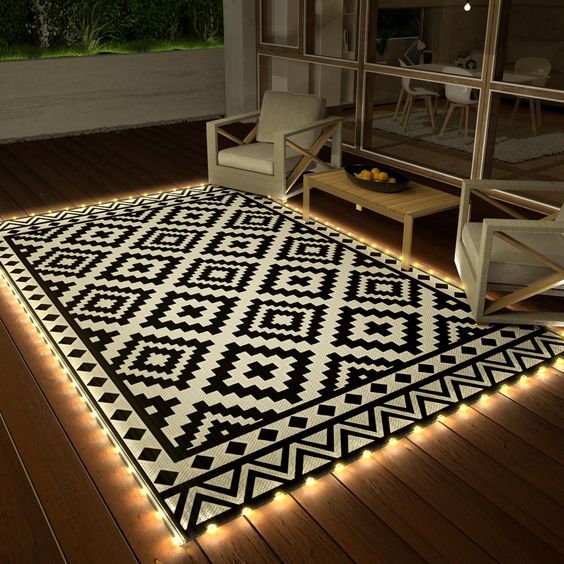
The stain-resistant polypropylene can be the perfect choice for cool outdoor rugs if you reside in a hot and humid area. These rugs don’t fade out on being exposed to sunlight and can handle heavy foot traffic. Despite ranking high in terms of durability, the polypropylene rugs mimic the natural feel of a fiber rug when you walk barefoot. The chemical composition of these rugs makes them highly flammable. It’s advisable to place them away from barbeque pits. They are extremely pocket-friendly and can be cleaned easily using a sponge or wipe on getting stained.
Polyester
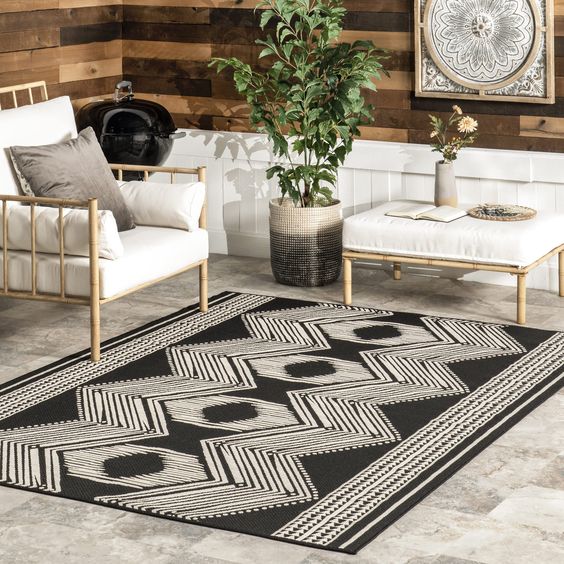
Residents of dry climates can shop for cool outdoor rugs made of polyester. These fade-resistant rugs are available in different colors and design options to match your outdoor aesthetics. You should avoid placing them in dining areas as it can be tough to remove oil-based stains from a polyester rug. Polyester is known for its colorfast properties which keep it secured from fading out easily. A tight-knit renders a silky texture if you walk on these rugs barefoot.
Nylon
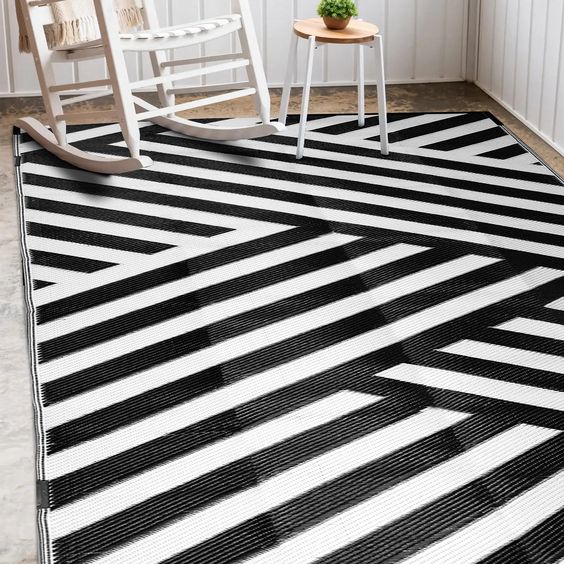
Nylon is a stain and fade-resistant fabric making it well suited for areas receiving heavy footfall. However, nylon gets heated up very quickly so you should avoid placing it under direct sunlight. A covered area such as a gazebo can be the perfect spot for placing cool outdoor rugs made of nylon.
Sisal & Jute
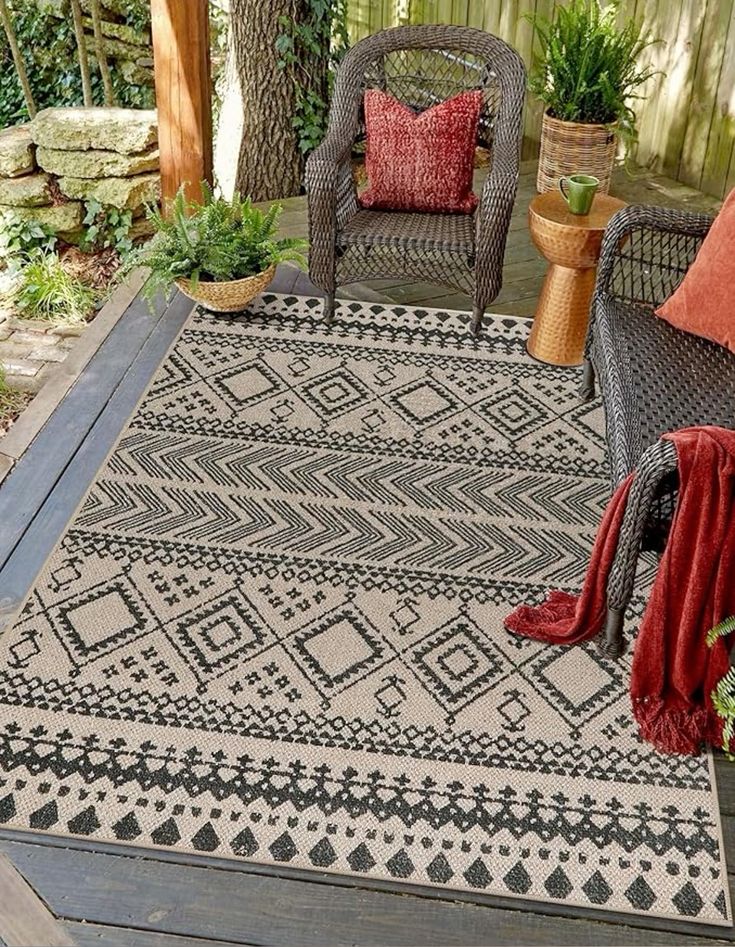
If you are searching for biodegradable options in cool outdoor rugs, then you can get the ones made of Sisal & Jute. These firm and heavy-duty rugs are perfect for being used outdoor. You can place them underneath a patio or porch without having to worry about mildew growth or fading.
Sisal and jute are natural, biodegradable fibers with a warm, textured look, and they feel great underfoot. The trade-off is moisture. As far as I know, natural fibers absorb water and are prone to mildew and fading, so these rugs suit a covered, dry area such as a screened porch or a spot well under a roof. If your rug will be exposed to rain, humidity or direct sun, choose a synthetic material like polypropylene or polyester instead. Check the manufacturer’s label to see whether a specific rug is rated for outdoor use.
Outdoor Rug Material FAQ
What is the best material for outdoor rugs?
It depends on your space. Synthetic materials such as polypropylene and polyester are popular for exposed patios because they handle sun, rain and spills, while natural fibers like sisal and jute are better suited to covered, dry areas.
Can you use a jute rug outside?
Only in a covered, dry area. Jute is a natural fiber that absorbs moisture, so it can mildew and fade if it gets wet or sits in direct sun.
How do you keep an outdoor rug from fading?
Choose a fade-resistant material, follow the care label and, if you can, place the rug in partial shade or move it out of direct sun during the hottest part of the day.
How do you clean an outdoor rug?
Brush off loose dirt, scrub with diluted dish soap and a soft brush, rinse with a hose and let the rug dry fully before you put furniture back. Check the care label first, and never mix bleach with vinegar or other cleaners.
These answers are general guidance based on how these materials usually behave. I kept them cautious, so check the label and care instructions for any rug you buy. The warning about not mixing bleach with vinegar comes from the CDC and poison experts, which I explained earlier.
How to Clean and Care for an Outdoor Rug
Clean outdoor rugs with a scrub brush, a hose and diluted dish soap, and follow the care label. If you use bleach, use it alone and never mix it with vinegar or other cleaners. The CDC warns that household bleach can release chlorine gas when mixed with certain other cleaning products, and poison experts report that mixing bleach with an acid such as vinegar does this. Rinse well and let the rug dry completely, because the EPA notes that drying wet materials within 24 to 48 hours helps prevent mold growth. If you live in a cold climate, store your rug during snowy months. Read the CDC’s chlorine fact sheet and the EPA’s guide to mold, moisture and your home for more.